If you’ve been waking up tired despite a full night’s sleep, craving sugar by 4 p.m., or noticing stubborn weight around your midsection no matter how clean you eat, your cortisol levels might be the missing piece of the puzzle. Cortisol, often called the “stress hormone,” is meant to protect you in short bursts. But in today’s always-on world of deadlines, traffic, screens, and financial pressure, many people walk around with chronically elevated cortisol — and it quietly affects everything from digestion to sleep to mood.
The good news is that a cortisol detox naturally doesn’t require expensive supplements or extreme lifestyle overhauls. Ayurveda, India’s 5,000-year-old system of natural healing, offers a time-tested, food-and-lifestyle-based approach to calming the nervous system and bringing stress hormones back into balance. In this guide, you’ll learn what high cortisol actually feels like, why Ayurveda views stress differently from modern medicine, and ten practical Ayurvedic strategies — backed by both traditional wisdom and everyday foods — to help you lower cortisol naturally and feel like yourself again.
Also Read: Ayurvedic Detox
What Is Cortisol and Why Does It Matter?
Cortisol is a hormone produced by your adrenal glands, the small glands sitting atop your kidneys. It follows a natural daily rhythm: levels are meant to peak shortly after you wake up to give you energy and focus, then gradually decline through the day, dipping low by bedtime so you can sleep. This is your body’s built-in alarm system, and it’s incredibly useful when you’re facing a genuine emergency.
The problem arises when stress isn’t occasional but constant. Work pressure, poor sleep, excessive caffeine, overtraining, and even scrolling on your phone late at night can keep cortisol elevated long after the original “threat” has passed. Over time, this chronic elevation can disrupt nearly every system in the body.
High Cortisol Symptoms to Watch For
Recognising high cortisol symptoms early can help you intervene before stress takes a bigger toll. Common signs include:
- Persistent fatigue, especially despite adequate sleep
- Difficulty falling asleep or staying asleep
- Increased belly fat that doesn’t respond to diet or exercise
- Sugar and salt cravings, particularly in the afternoon or evening
- Irritability, anxiety, or a constant sense of being “on edge”
- Frequent colds or slow healing due to a weakened immune response
- Irregular menstrual cycles or low libido
- Brain fog and difficulty concentrating
- Elevated blood pressure or a racing heart in calm situations
If several of these sound familiar, it’s worth paying closer attention to your stress levels and daily habits — and considering a structured approach to lowering cortisol naturally.
Why Ayurveda Offers a Natural Path to Cortisol Detox
Modern endocrinology and Ayurveda actually agree on more than you’d expect. Ayurveda doesn’t use the word “cortisol,” but it has long recognised the effects of excess stress on the body through the lens of the doshas — the three energetic forces of Vata, Pitta, and Kapha that govern physical and mental function.
Chronic stress, in Ayurvedic terms, is largely a Vata imbalance. Vata governs the nervous system and movement, and when it’s aggravated by irregular routines, excessive stimulation, or poor digestion, it manifests as anxiety, insomnia, and the kind of “wired but tired” feeling that mirrors high cortisol. Ayurvedic treatment for high cortisol, therefore, focuses on grounding and stabilising Vata through diet, herbs, daily rhythm (dinacharya), and mind-body practices — rather than simply masking symptoms.
This whole-body, root-cause approach is precisely why so many people in India and abroad are turning back to Ayurveda as a sustainable way to manage stress hormones, rather than relying solely on quick fixes.
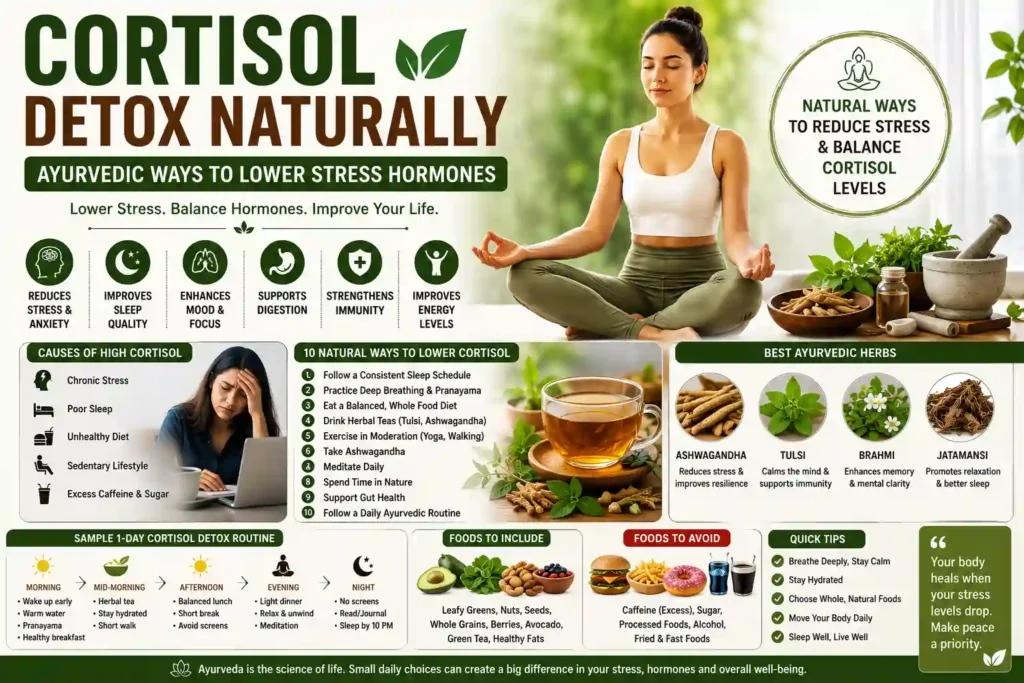
10 Ayurvedic Ways to Lower Cortisol Naturally
Here are ten practical, evidence-informed Ayurvedic strategies you can start incorporating today.
1. Start Your Day with Abhyanga (Self-Oil Massage)
A warm sesame or coconut oil self-massage before showering is one of Ayurveda’s oldest tools for calming Vata and, by extension, the nervous system. The gentle pressure and warmth stimulate the parasympathetic nervous system — your body’s “rest and digest” mode — which helps counteract the fight-or-flight response that keeps cortisol elevated. Even five to ten minutes a few times a week can make a noticeable difference in how grounded you feel throughout the day.
2.Take Ashwagandha, Ayurveda’s Classic Adaptogen
Few herbs are as closely studied for stress as ashwagandha (Withania somnifera). Traditionally used in Ayurvedic treatment for high cortisol, this adaptogenic root helps the body adapt to stress more efficiently and supports healthier cortisol rhythms over time. It’s commonly taken as a powder mixed with warm milk at night, or in capsule form. As with any herb, it’s best to start with a lower dose and consult an Ayurvedic practitioner, especially if you’re on other medications.
3.Practice Pranayama (Breathwork) Daily
Simple breathing techniques like Nadi Shodhana (alternate nostril breathing) and Bhramari (humming bee breath) directly signal safety to your nervous system. Slow, controlled breathing lowers heart rate and activates the vagus nerve, which plays a key role in regulating cortisol release. Just five minutes each morning can shift your entire physiological state before the day’s stressors even begin.
4.Follow a Consistent Dinacharya (Daily Routine)
Ayurveda places enormous emphasis on routine — waking, eating, and sleeping at roughly the same times each day. Irregular schedules confuse your circadian rhythm, which is tightly linked to your cortisol curve. Going to bed before 10 p.m. and waking with the sun, rather than relying on artificial light and screens late into the night, helps cortisol follow its natural rise-and-fall pattern instead of staying chronically elevated.
5.Use Brahmi and Jatamansi for Mental Calm
Brahmi (Bacopa monnieri) and Jatamansi (Nardostachys jatamansi) are two Ayurvedic herbs traditionally used to support memory, focus, and emotional steadiness. Both are considered Medhya Rasayanas, or rejuvenators for the mind, and are often included in herbal formulations aimed at reducing anxiety and supporting healthy stress hormone levels.
6.Practice Yoga Nidra or Restorative Yoga
Unlike vigorous workouts, which can sometimes spike cortisol further if overdone, Yoga Nidra (“yogic sleep”) is a guided relaxation practice that brings the body into a deeply restful state while remaining consciously aware. Just 20 minutes of Yoga Nidra has been associated in research with measurable reductions in perceived stress, making it an accessible, no-equipment way to support cortisol detox naturally.
7. Avoid Excess Caffeine, Especially on an Empty Stomach
Tea and coffee are deeply woven into Indian daily life, but caffeine directly stimulates cortisol release, particularly when consumed first thing in the morning before eating. If you love your chai, try having it after breakfast rather than before, and consider swapping a second or third cup for a calming herbal alternative like tulsi (holy basil) tea, which is itself adaptogenic.
8. Spend Time in Nature (Prakriti Chikitsa)
Ayurveda has always recognised humans as part of nature, not separate from it. Spending even 20 minutes outdoors — walking barefoot on grass, sitting near a tree, or simply being away from screens — has been shown to lower cortisol levels in numerous modern studies. This concept of nature-based healing aligns closely with what Ayurveda has practised for centuries.
9. Practice Mindful Eating
Eating while stressed, distracted, or in a rush impairs digestion (Agni) and keeps the body in a low-grade stress state, which can perpetuate elevated cortisol. Ayurveda recommends eating in a calm setting, without screens, and chewing slowly. This isn’t just about digestion — it actively tells your nervous system that it’s safe to relax.
10.Use Adaptogenic Rasayanas Like Shatavari and Guduchi
Beyond ashwagandha, Ayurveda offers a range of Rasayana (rejuvenative) herbs such as Shatavari and Guduchi, which support the adrenal glands and overall resilience to stress. These are often used as part of a broader Ayurvedic treatment for high cortisol, particularly for individuals dealing with long-term burnout or hormonal fatigue.
Also Read: Best Ashwagandha for Immunity: Benefits, Dosage & Results
Cortisol-Lowering Foods: Natural Ways to Reduce Cortisol Through Diet
What you eat plays a direct role in how your body manages stress. Here are some of the most effective cortisol-lowering foods, many of which are easy to find in any Indian kitchen.
- Ghee: Used widely in Ayurveda, ghee nourishes the nervous system and supports healthy fat-soluble vitamin absorption, which plays a role in hormone balance.
- Turmeric: Its active compound, curcumin, has anti-inflammatory properties that may help reduce the inflammatory load that keeps cortisol elevated.
- Dark leafy greens: Spinach and methi are rich in magnesium, a mineral known to support relaxation and healthy cortisol regulation.
- Bananas and oranges: High in potassium and vitamin C, both nutrients are associated with lower cortisol response during stress.
- Almonds and walnuts: A good source of healthy fats and magnesium, ideal for a calming evening snack.
- Fermented foods like curd (dahi): Support gut health, which is closely tied to the body’s stress response through the gut-brain axis.
- Herbal teas: Tulsi, chamomile, and liquorice root tea are traditional calming beverages that can replace a second cup of coffee.
Pairing these cortisol-lowering foods with regular meal timings — another core Ayurvedic principle — amplifies their benefits far more than eating them sporadically.
Lifestyle Habits That Support Long-Term Cortisol Balance
Beyond specific herbs and foods, a few overarching lifestyle shifts make a real difference:
- Prioritize sleep quality, not just quantity. Aim for a wind-down routine without screens at least 30 minutes before bed.
- Move your body daily, but favor walking, yoga, or swimming over consistently high-intensity training if you’re already feeling burnt out.
- Limit alcohol, which disrupts sleep architecture and can elevate cortisol the following day.
- Build in micro-breaks during work hours — even two minutes of deep breathing between meetings adds up over a week.
- Stay socially connected. Ayurveda has always recognized community and emotional support as essential to wellbeing, and modern research backs this up as a genuine cortisol-lowering factor.
Frequently Asked Questions
How long does it take to lower cortisol naturally? Most people notice improvements in sleep and mood within two to four weeks of consistent changes to diet, routine, and stress-management practices. Deeper hormonal balance, especially after long-term chronic stress, can take two to three months of sustained effort.
Can Ayurveda actually lower cortisol, or is it just relaxation? While more large-scale research is still emerging, several Ayurvedic herbs like ashwagandha have been studied specifically for their effect on cortisol levels, with promising results. Combined with stress-reducing routines, the overall effect goes beyond simple relaxation.
What is the fastest way to reduce cortisol naturally? Slow, deep breathing is one of the quickest ways to signal safety to your nervous system within minutes. For more sustained results, combining breathwork with consistent sleep timing and reduced caffeine intake tends to show the fastest visible improvement.
Are there any side effects of Ayurvedic herbs for stress? Most Ayurvedic herbs, like ashwagandha and Brahmi, are well tolerated, but they can interact with thyroid medication, sedatives, or blood pressure medication. It’s important to consult a qualified Ayurvedic practitioner or your doctor before starting any new herb, especially if you’re pregnant, breastfeeding, or managing a chronic condition.
Can diet alone lower cortisol without other lifestyle changes? Diet plays an important supporting role, but cortisol is influenced by sleep, stress perception, and routine just as much as nutrition. The most effective approach combines cortisol-lowering foods with consistent sleep, movement, and stress-reduction practices.
Final Thoughts: Start Your Cortisol Detox Naturally, One Habit at a Time
Lowering cortisol isn’t about a single magic herb or a 7-day cleanse — it’s about gently retraining your nervous system through consistent, sustainable habits. Ayurveda’s strength lies in this very approach: small, daily rituals like abhyanga, mindful eating, herbal support, and a steady routine that, together, help your body remember how to feel calm again.
Start small. Pick one or two practices from this list — perhaps a morning oil massage and swapping your second coffee for tulsi tea — and build from there. Your body’s stress response took time to become dysregulated, and it deserves the same patience to heal.
If you’re dealing with persistent high cortisol symptoms, consider consulting a qualified Ayurvedic practitioner or healthcare provider to create a personalized plan suited to your unique constitution (Prakriti) and current imbalances. Ready to take the next step toward natural stress relief? Explore our related guides on Ayurvedic herbs for anxiety and daily Ayurvedic routines for a calmer, more balanced life.
This article is intended for general informational purposes and does not replace personalized medical or Ayurvedic consultation. Please speak with a qualified healthcare provider before starting any new herbal regimen, especially if you have an existing health condition or are on medication.
Follow Us On Instagram For More Tips