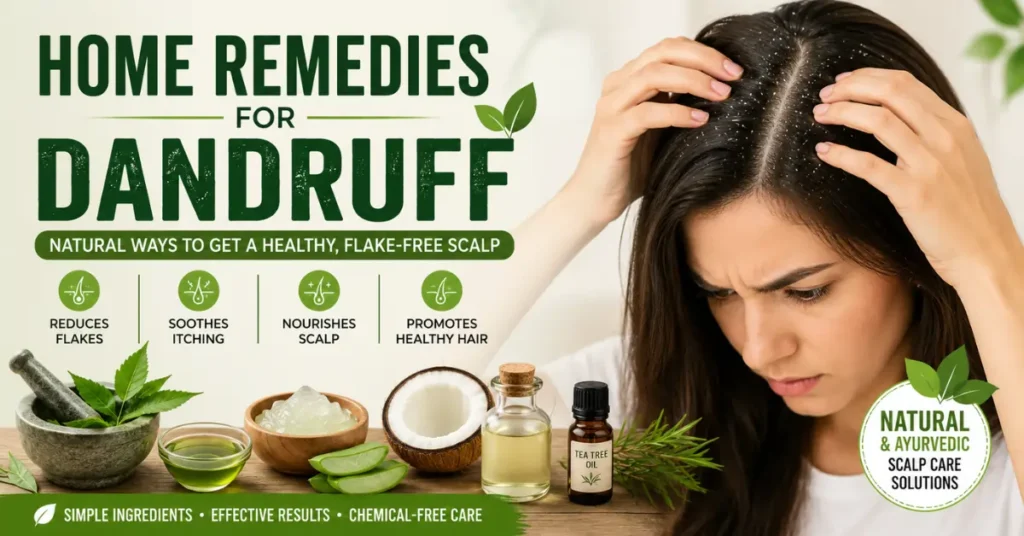
You reach for your favourite dark kurta or black shirt, put it on, and within an hour, white flakes. Sound familiar? Dandruff is one of the most common scalp conditions in India, affecting nearly half of the adult population at some point in their lives. It’s not just a hygiene issue. It can be caused by a dry scalp, fungal growth, excess oil production, dietary gaps, or even stress.
The good news? You don’t always need medicated shampoos or expensive salon treatments to deal with it. Many of the most effective dandruff solutions have been sitting in Indian kitchens and home gardens for centuries. In this article, you’ll discover practical, proven home remedies for dandruff that genuinely work — along with tips on what causes it and how to keep it from coming back.
Also Read: Home Remedies for Hair Fall
What Causes Dandruff ? Understanding the Root of the Problem
Before jumping into solutions, it helps to understand why dandruff happens in the first place. The most common cause is a yeast-like fungus called Malassezia, which lives on most people’s scalps without causing trouble. In some people, however, it triggers an inflammatory response that speeds up skin cell turnover, leading to those visible white or yellowish flakes.
Other contributing factors include:
- Dry scalp — more common in winter and in low-humidity environments
- Oily scalp (seborrheic dermatitis) — excess sebum feeds fungal growth
- Infrequent washing — allows oil and dead skin to accumulate
- Sensitivity to hair products — certain chemicals can irritate the scalp
- Poor diet — low zinc, B vitamins, or healthy fats can worsen dandruff
- Stress — weakens immune response, making the scalp more vulnerable
Understanding your type of dandruff — dry versus oily — helps you pick the right remedy. Dry scalp dandruff produces fine, white flakes; oily dandruff tends to produce larger, yellowish, clumpier flakes.
Also Read: How to stop hair fall Female– Natural Remedies & Tips
7 Effective Home Remedies for Dandruff That Actually Work
1. Coconut Oil and Lemon Juice — The Classic Indian Combination
If there’s one home remedy for dandruff that most Indian grandmothers swear by, it’s warm coconut oil with lemon juice. Coconut oil has antifungal and moisturising properties that address two key causes of dandruff at once — fungal overgrowth and a dry scalp.
How to use it: Warm two tablespoons of pure cold-pressed coconut oil slightly (it should be comfortably warm, not hot). Mix in the juice of half a lemon. Part your hair into sections and massage the mixture into your scalp using your fingertips. Leave it on for 30 to 45 minutes, then wash off with a mild shampoo.
The lemon juice, being acidic, helps restore the scalp’s pH balance and has mild antifungal properties. Use this remedy two to three times a week for the best results.
Featured Answer: Coconut oil mixed with fresh lemon juice is one of the best natural remedies for dandruff. The oil moisturises a dry scalp while fighting fungal growth, and the lemon’s acidity balances scalp pH.
2. Neem — Ayurvedic Dandruff Treatment That Has Stood the Test of Time
Neem (Azadirachta indica) is a cornerstone of Ayurvedic medicine and one of the most effective natural treatments for scalp conditions. It contains nimbidin and nimbin — compounds with potent antifungal and antibacterial properties that directly target the Malassezia fungus responsible for dandruff.
How to use it: Boil a handful of fresh or dried neem leaves in water for 15–20 minutes. Allow the water to cool, strain it, and use it as a final rinse after shampooing. Alternatively, make a paste of neem leaves and apply it to the scalp for 30 minutes before washing.
Neem oil is another option — dilute 5–6 drops in a carrier oil like coconut or almond oil and massage it into the scalp. Because neem oil has a strong smell, you may want to leave it on for just 20 minutes before rinsing.
This itchy scalp and dandruff solution is particularly effective for those dealing with persistent fungal dandruff or scalp inflammation.
3. Tea Tree Oil — A Potent Antifungal Scalp Treatment
Tea tree oil has been clinically studied for its effects on dandruff, and the results are promising. A study published in the Journal of the American Academy of Dermatology found that a 5% tea tree oil shampoo significantly reduced dandruff severity. Tea tree oil’s active compound, terpinen-4-ol, disrupts the cell membranes of fungi and bacteria on the scalp.
How to use it: Add 10–15 drops of tea tree oil to your regular shampoo bottle and shake well. Use this blend each time you wash your hair. Alternatively, mix 5 drops of tea tree oil with two tablespoons of coconut oil and massage it into your scalp. Leave it on for 20–30 minutes before washing out.
Always dilute tea tree oil before use — applying it directly to the skin can cause irritation. Do a patch test on your wrist before applying it to your scalp for the first time.
4. Apple Cider Vinegar Rinse — Restoring Scalp Balance
Apple cider vinegar (ACV) is an excellent home remedy for dandruff, especially for those with an oily scalp. Its acidity changes the scalp’s pH, making it a less hospitable environment for yeast and fungi. It also helps remove product buildup and excess oil — two factors that worsen dandruff.
How to use it: Mix equal parts of raw, unfiltered apple cider vinegar and water. After shampooing, pour the mixture over your scalp and gently work it in with your fingers. Leave it for two to five minutes, then rinse thoroughly with cool water. Do this once or twice a week.
A word of caution: if you have an already irritated or broken scalp, skip ACV as its acidity can sting. Start with a more diluted solution (one part ACV to three parts water) if you have sensitive skin.
5. Yoghurt and Fenugreek Seeds — A Protein-Rich Scalp Mask
Fenugreek (methi) seeds are a well-known Ayurvedic dandruff treatment. They are rich in proteins and nicotinic acid, which strengthen hair roots and nourish the scalp. Fenugreek also has antifungal properties, making it doubly effective for dandruff.
Combined with yoghurt — which contains lactic acid and beneficial bacteria — this mask becomes one of the best natural remedies for dandruff.
How to use it: Soak two tablespoons of fenugreek seeds overnight in water. In the morning, grind them into a smooth paste. Mix this paste with three to four tablespoons of plain, full-fat yoghurt. Apply the mixture to your scalp and hair, covering thoroughly. Leave it on for 30–45 minutes, then wash off with a gentle shampoo.
Use this mask once a week. It works particularly well in the summer when scalp sweat and oil buildup are higher.
6. Aloe Vera — Soothing Relief for an Itchy Scalp
If your main complaint is an itchy scalp along with dandruff, aloe vera is your friend. Aloe vera contains salicylic acid, enzymes, and antifungal compounds that reduce scalp inflammation and itchiness almost immediately. It also hydrates the scalp without clogging pores.
How to use it: Extract fresh gel from an aloe vera leaf (or use pure store-bought gel with no added fragrance or alcohol). Apply it directly to your scalp and gently massage it in. Leave it on for 20–30 minutes before shampooing. For an intensive treatment, leave it on overnight and wash it off in the morning.
This is one of the gentlest itchy scalp and dandruff solutions available — suitable even for those with sensitive skin or mild scalp conditions.
7. Onion Juice — A Strong but Effective Remedy
Onion juice is not the most pleasant-smelling treatment, but it has legitimate benefits for the scalp. Onions are rich in sulphur, which has antibacterial and antifungal properties. Sulphur also supports keratin production, which strengthens the scalp skin barrier.
How to use it: Blend or grate one medium onion and squeeze out the juice using a muslin cloth. Apply the juice directly to the scalp using a cotton ball. Leave it on for at least 30 minutes (an hour is better). Rinse thoroughly and wash hair with a shampoo that neutralises the odour — lemon juice or a gentle shampoo works well.
To reduce the smell, you can mix onion juice with a few drops of lavender or rose essential oil. Use once a week.
Ayurvedic Dandruff Treatment — Ancient Wisdom for Modern Scalps
Ayurveda views dandruff as primarily a Kapha-Vata or Pitta imbalance — an excess of certain doshas that leads to scalp sensitivity, dryness, or excess oil production. Traditional Ayurvedic dandruff treatment focuses not just on topical remedies but on overall lifestyle and dietary balance.
Bhringraj Oil Massage
Bhringraj (Eclipta alba) is known as the “king of herbs” in Ayurveda for hair care. Bhringraj oil nourishes the scalp, reduces inflammation, and supports healthy hair growth. Regular scalp massages (champi) with bhringraj oil improve blood circulation to the scalp, which helps control dandruff over time.
Warm the oil slightly and massage it into the scalp for 10–15 minutes using circular motions. Leave it on for at least an hour before washing. Used consistently once or twice a week, it can significantly reduce dandruff recurrence.
Triphala Rinse
Triphala — a combination of three fruits (amalaki, bibhitaki, and haritaki) — is a powerful Ayurvedic cleanser. Boil one tablespoon of triphala powder in two cups of water, cool, strain, and use as a hair rinse. It helps detoxify the scalp and balance oil production.
Diet and Lifestyle Tips (Ayurvedic Perspective)
- Reduce refined sugars and processed foods, which can worsen fungal growth
- Increase intake of zinc-rich foods — pumpkin seeds, chickpeas, lentils
- Include omega-3 fatty acids — flaxseeds, walnuts
- Stay well hydrated
- Manage stress through yoga, pranayama, or regular physical activity
Tips to Prevent Dandruff from Coming Back
Getting rid of dandruff is only half the battle. Here’s how to keep it from returning:
- Wash your hair regularly — every two to three days in humid Indian summers; less frequently in winter if your scalp is dry
- Avoid scratching — it can worsen inflammation and spread infection
- Rinse hair thoroughly — shampoo residue irritates the scalp
- Avoid excessive heat styling — dryers and straighteners strip moisture
- Change your pillowcase often — it accumulates oils and dead skin cells
- Stay consistent with your chosen remedy — natural treatments take time; give any remedy at least three to four weeks before judging results
- Check your hair products — silicone-heavy conditioners and styling gels can clog scalp pores
Frequently Asked Questions About Dandruff Treatment at Home
Q1. How long does it take for home remedies to work on dandruff?
Most home remedies for dandruff show visible improvement within two to four weeks of consistent use. Natural treatments work gradually by addressing the root cause rather than simply masking symptoms. Be patient and stick with your chosen remedy for at least one month before switching.
Q2. Which is the best natural remedy for dandruff in India?
Neem and coconut oil are widely considered among the best natural remedies for dandruff in India, both for their accessibility and effectiveness. Neem’s antifungal compounds directly fight the fungus causing dandruff, while coconut oil moisturises and protects the scalp. Fenugreek and bhringraj are excellent Ayurvedic options as well.
Q3. Can dandruff go away permanently?
For most people, dandruff is a chronic, manageable condition rather than a one-time problem. With consistent scalp care — regular washing, a balanced diet, and periodic use of natural treatments — you can keep dandruff well under control. Complete, permanent elimination depends on the underlying cause.
Q4. Should I oil my hair if I have dandruff?
Yes, but carefully. If you have a dry scalp, light oiling with coconut or almond oil is beneficial. If you have an oily scalp with dandruff, apply oil only to the scalp sparingly and don’t leave it on for more than an hour. Avoid heavy oils like castor oil on an already oily scalp, as they can worsen buildup.
Q5. When should I see a doctor for dandruff?
Home remedies work well for mild to moderate dandruff. However, if your dandruff is severe, involves significant redness, thick yellow crusting, hair loss, or does not improve after six to eight weeks of consistent home treatment, consult a dermatologist. You may have seborrheic dermatitis or a scalp condition that needs medicated treatment.
Conclusion — Start Your Journey to a Flake-Free Scalp Today
Dandruff is frustrating, but it’s also manageable — especially with the wealth of natural remedies available right in your home. Whether you start with a simple coconut oil and lemon massage, explore Ayurvedic treatments like bhringraj or neem, or add a fenugreek hair mask to your weekly routine, consistency is the key to seeing real results.
Every scalp is different, so it may take a little trial and error to find the remedy that works best for you. The important thing is to start — and to give each remedy enough time to do its work.
Ready to say goodbye to dandruff for good? Pick one remedy from this list, commit to it for four weeks, and track your progress. A healthier, flake-free scalp is well within reach — no harsh chemicals required.
Follow Us On Instagram For More Healthy Tips